Top 20 Best Air Compressor For Home Garage - Top Picks & Buying Guide
https://gobestez.com/best-air-compressor-for-home-garage/
It's possible to get twice as much done in half the time with the best air compressor for home garage. This in-depth buying guide will help you choose the air compressor that best fits your needs.
Before you go out and purchase an air compressor for your garage, consider the following. So, to discover the best solution, you should read this whole article!
TYPES
I have classified air compressors according to the shapes below:
Horizontal
Horizontal air compressors, such as the Craftsman CMXECXA0201041, are compact enough to stow away discreetly beneath desks and tables. They are well suited for use in garages, woodworking shops, and other similar facilities.
Vertical
Because of their vertical design, they take up less room on the ground. Vertical air compressors, such as the WEN 2289, are popular because they're portable.
Get a vertical air compressor if you want to move it from one position to another.
Pancake
A pancake compressor, such as the DEWALT DWFP55126, is a portable device for residential and small industrial use.
The pancake gets its name from the flat, oval-shaped tank used to hold the compressed air, reminiscent of a pancake.

Storage tanks for pancake compressors are typically circular and flat. The layout is more secure and takes up less room than competitors.
Inflator
Due to the absence of a reservoir, you must keep on the inflator's engine at all times to provide a steady flow of air.
Using the inflator compressors, such as the WindGallop LD-1618D, you may inflate tiny floats, tires, and sporting equipment.
This part will provide a comprehensive guide for deciding on the best air compressor for the home garage. Check it out!
Size
Producers of compressors often specify storage tank capacities in gallons.
I think the tanks of 60 or 80 gallons, such as the California CAT-60040CAD, are necessary for a residential garage's most delicate air compressor.
Air Capacity
The term "air capacity" refers to the air a compressor can generate, store, and replenish in a given time.
You can determine the compressor's air capacity based on the volume and pressure of the incoming air.
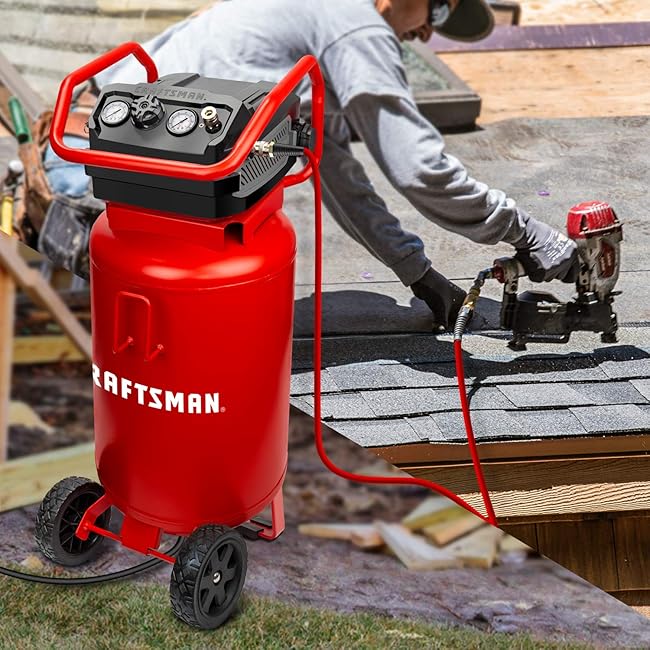
Manufacturers often provide this metric in cubic feet per minute (CFM).
Depending on your demands, a home air compressor may need as little as 2 SCFM or as much as 20 SCFM, such as the SCFMCRAFTSMAN CMXECXA0232043.
Power Supply
Gas-powered engines, such as the Rolair GD4000PV5H, can power portable air compressors when the grid is down. These air compressors aren't ideal for use in a private garage.
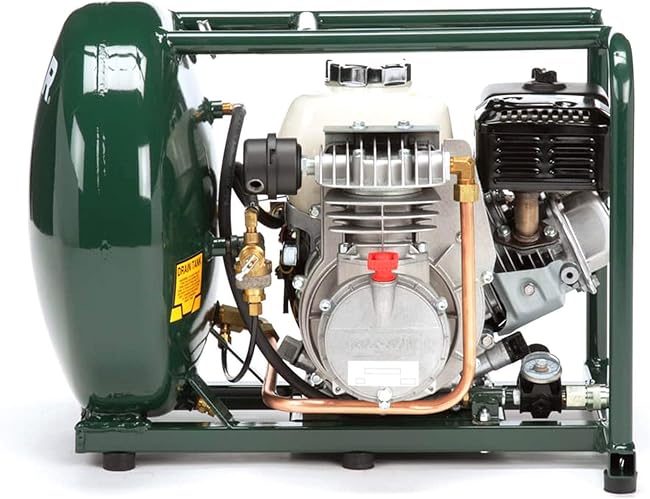
They make more noise and leave more residue than their electric counterparts.
Exhaust fumes pose health risks if used in a closed environment. Thus proper ventilation is essential.
In circumstances, an electric device, such as the VacLife ATJ-6788, is an optimal option for domestic use. Compressor motors need a 115-volt, 20-amp supply.
It's essential to have a well-planned electrical outlet layout in your garage to run your compressor without incident.
Horsepower
A compressor's horsepower (HP) rating reflects the efficiency and power of its motor or engine. Boosting the PSI (pounds per square inch) of the air around you requires increasing horsepower.
When the PSI of a compressor is increased, the tank may store more air, enabling the user to use air equipment for longer.
A compressor, such as the WORKSITE WCAP334, offers a horsepower of 150 PSI that is the minimum level to power most household equipment.
Extra Features
When shopping for an air compressor, knowing which models have the specifications necessary to complete your tasks quickly is essential.
Low-maintenance and oil-free compressed air systems benefit from oil-free pumps.
The functioning of a belt-drive system is less audible than that of a direct-drive one.
Overheat prevention cuts power to the engine to avoid any further damage.
The exhaust may be adjustable so that it vents away from the workspace.
With various couplers at your disposal, you can switch between jobs without constantly reconnecting and unplugging equipment.
You get more bang for your buck thanks to the bundled hoses, nailers, and blow guns. Air hoses are optional and not included with all compressors.
You may acquire extra air storage by purchasing different air tanks.
You may monitor the tank's pressure gauge's air pressure within the tank.
The pressure gauge shows the reduced pressure of the line from the air tank.
You may lower the pressure coming from the tank by turning the regulator's knob.
A compressor's on/off switch is a mechanical device that activates or deactivates the device's electrical circuit.
The safety valve releases the tension when the internal pressure becomes too high. Pulling it will release the air pressure in your tank.
You may find the air compressor's drain valve near its base. It will empty water condenses periodically.
What kind of garage compressor you need will rely heavily on its intended use. Identifying your needs before shopping for an air compressor is essential.
You can learn more about the criteria I used to choose these products in my purchasing guide for the best air compressor for home garage. If you haven't discovered the best solution yet, I have a few suggestions for you here.
The BOSTITCH BTFP02012 is a simple and inexpensive option for occasional use and do-it-yourself applications. The maximum output pressure of this oil-free air compressor is 150 PSI, and the tank holds 6 gallons of air.
You should expect an airflow of around 2.6 SCFM from the compressor at 90 PSI. You may have a peaceful time working in your garage because it is quiet.
Check out my top picks below.
Our Top Picks
Kensun-EHRComp-A58B - Best for Fast Inflation
CRAFTSMAN CMEC6150K - Best for Quick Recovery Time
BOSTITCH BTFP02012 - Best for Quiet Run
DEWALT DWFP55126 - Best for High-Efficiency Motor
TEROMAS TMS-3015 - Best for Portable Size
Thank you for reading!
What size air compressor do I need for my home garage?
Choose a compressor with a capacity between 2.6 and 20 gallons if you want to use it in your garage at home.
The quantity and variety of air tools you want to use will determine the ideal size of your compressor.
What is a good size air compressor to run air tools?
Most air compressors used to power tools have flow rates between 10 and 110 cubic feet per minute (CFM). Low-CFM air compressors may inflate tires and power chippers, grinders, and sanders.
How many CFM air compressors do I need?
Generally, 0–5 cfm at 70–90 psi is enough for air tools with portable air compressors, but more extensive equipment attached to fixed systems often needs 10–15 cfm at 100–150 psi.
The GSPSCN Compressor is a brilliant example that provides fast inflation.
How do I know what size compressor to buy?
Identifying the peak pressure in pounds per square inch (PSI) and the cubic feet per minute (CFM) required by each item you plan to use is the best method for determining the appropriate size of a home air compressor.
Tank size is the subject of this video's presentation. Finding the perfect compressor for your garage will be much easier after watching this.


Comments
Post a Comment